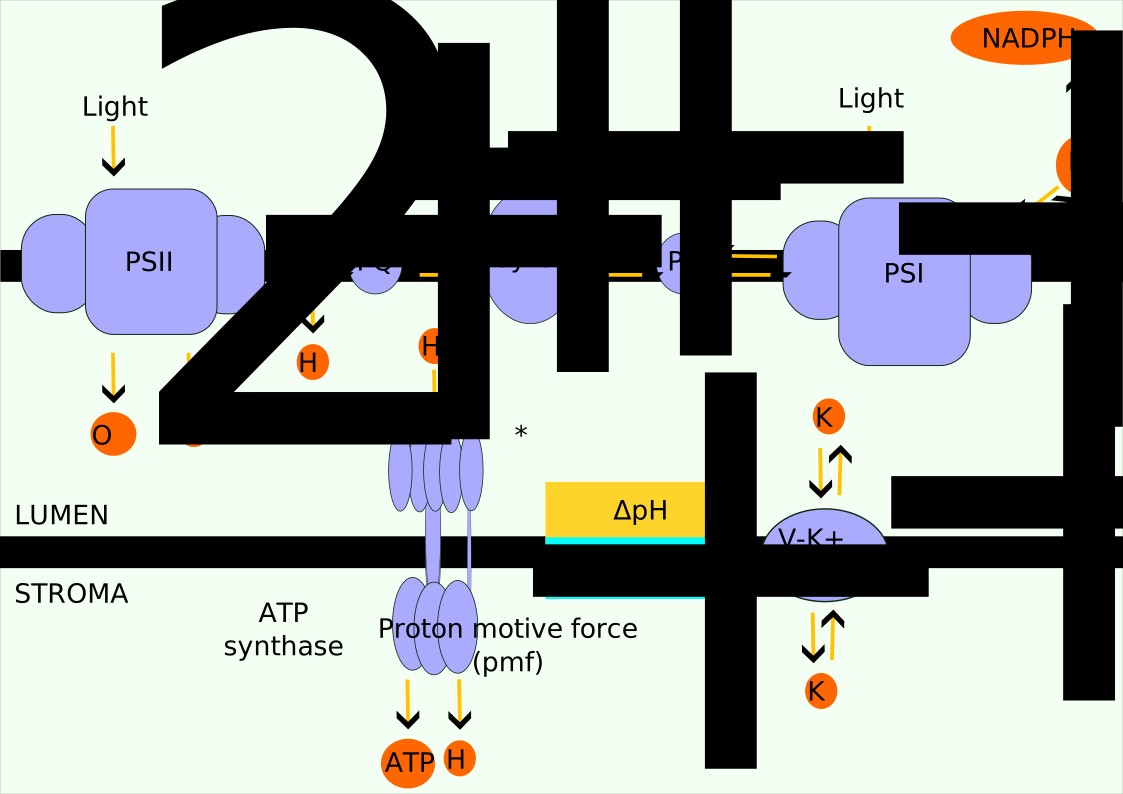
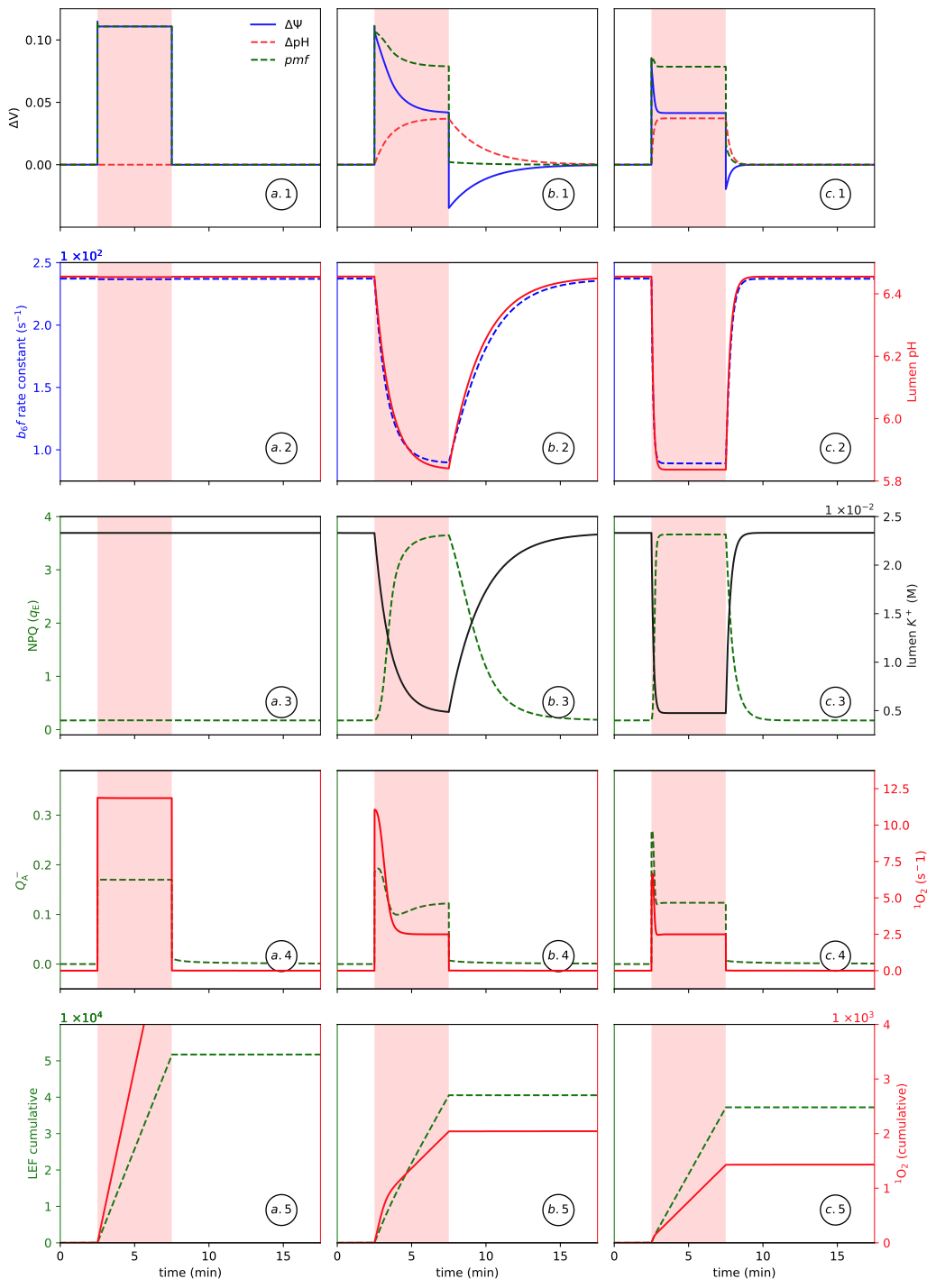
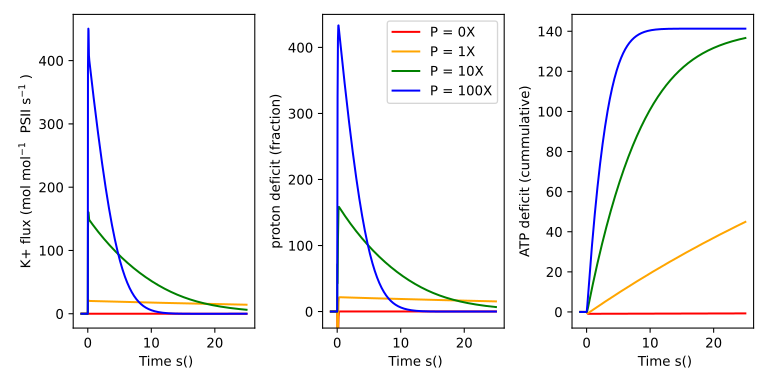
The Davis 2017 model is a mechanistic, dynamic model of the photosynthetic electron transport chain and the thylakoid proton motive force (PMF), built to explain how the PMF can itself limit photosynthesis by driving photosystem II (PSII) photodamage. Its central feature is that it resolves the PMF into its two thermodynamically distinct components: the transmembrane electric field (Δψ) and the lumen pH gradient (ΔpH). The model follows electron flow from PSII through the plastoquinone (PQ) pool, the cytochrome b6f complex, plastocyanin, photosystem I (PSI), ferredoxin and FNR to NADPH and the Calvin-Benson-Bassham (CBB) cycle, while proton accumulation in the lumen and charge separation across the membrane build the PMF that powers ATP synthase. Counter-ion fluxes — a KEA3 K⁺/H⁺ antiporter and a K⁺ channel — partition the PMF between its Δψ and ΔpH components, and non-photochemical quenching is represented through PsbS protonation and the xanthophyll cycle (violaxanthin ↔ zeaxanthin).
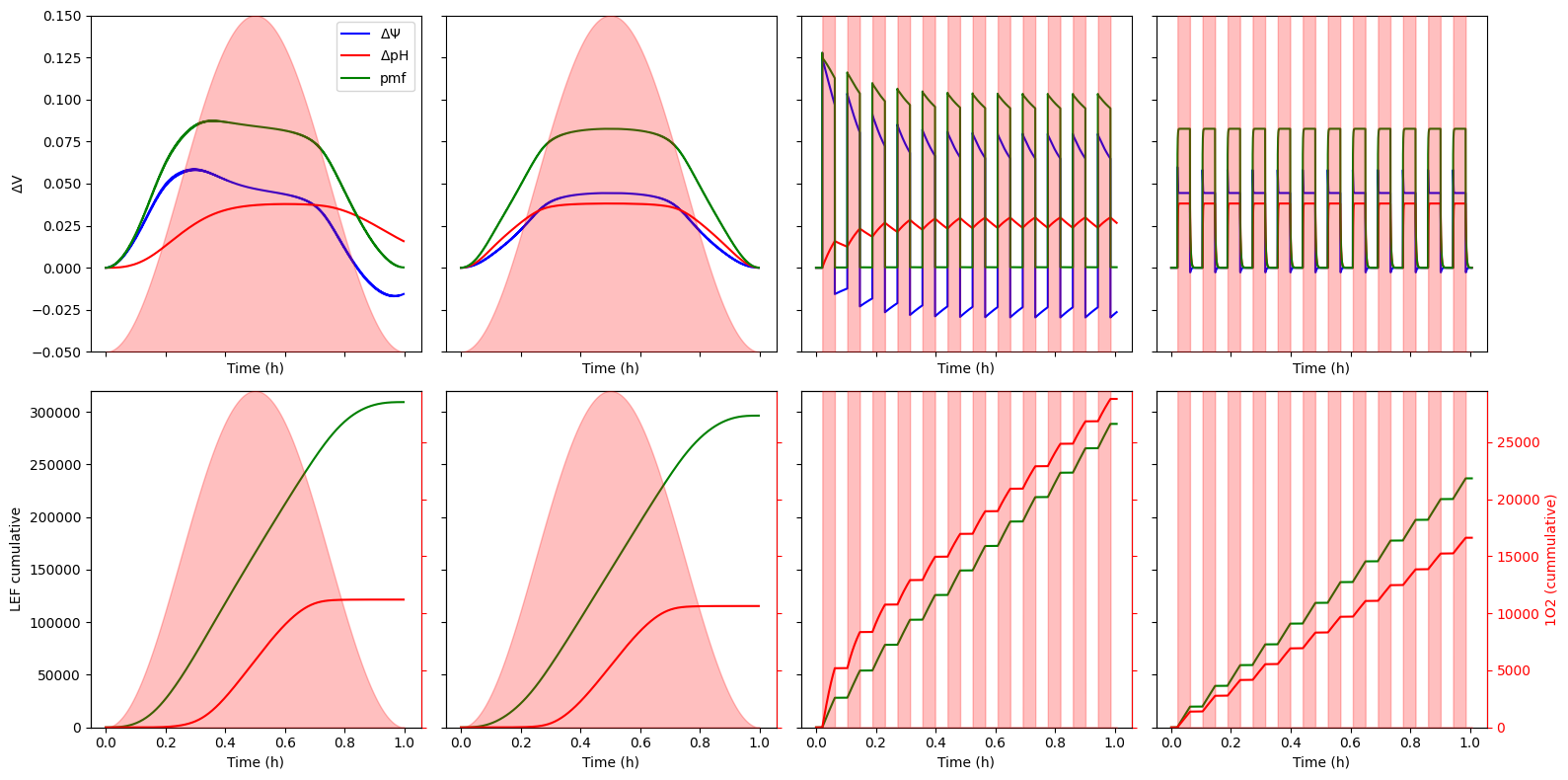
The key result of the model is that it is the Δψ component, rather than lumen acidification, that drives elevated PSII charge recombination, producing singlet oxygen and the subsequent photodamage to PSII. This makes the model a useful tool for reasoning about photoprotection under fluctuating light, where rapid changes in the balance between Δψ and ΔpH can transiently expose PSII to damaging conditions. By including explicit ion transport, it also connects to the same questions of PMF partitioning later explored in the Li 2021 model, which builds directly on this work. As such it serves as a good mechanistic base within GreenSloth for studying how the thylakoid membrane manages energy and protects itself against its own light-harvesting machinery.
Scheme