About Us

GreenSloth is developed and maintained by the Computational Biology Group at RWTH Aachen University, led by Prof. Dr. Anna Matuszyńska. Our research combines mechanistic mathematical modelling, systems biology, machine learning, and plant physiology to understand photosynthesis across biological scales, from molecular regulation within the thylakoid membrane to whole-leaf carbon assimilation and plant responses to fluctuating environments.
Our vision is to make mechanistic models reproducible, executable, and reusable. Rather than leaving published models as equations scattered across manuscripts and supplementary files, we reconstruct them as validated, documented software that can be explored, compared, and extended by the community. This philosophy underpins GreenSloth and our broader commitment to open, transparent, and reproducible computational biology.
The first version of GreenSloth was conceived and developed by Elouen Corvest as part of his Master's thesis. Beyond implementing the initial platform, he established many of the curation and validation principles that define GreenSloth today. His work introduced systematic approaches for comparing mechanistic photosynthesis models in a scientifically meaningful way—allowing models to be evaluated not only by their implementation, but also by their biological scope, mathematical formulation, assumptions, parameterisation, supported experimental modalities, and reproducibility. These principles continue to guide the evolution of the database.
Today, GreenSloth is a collaborative effort involving researchers, software developers, and students from our laboratory. Every model is independently reconstructed, validated against its original publication, and carefully documented before becoming part of the collection. We view GreenSloth not simply as a database, but as a living knowledge base for mechanistic photosynthesis modelling. We hope that the list of contributors will grow beyond the walls of our University and we will collectively preserve the tremendous computational work already done on the dynamics of photosynthesis.

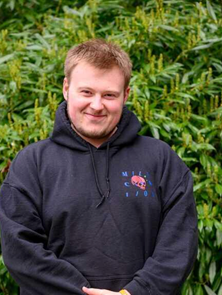
Elouen Corvest
Contributed to 6 models