Lam 2026, Nat. Commun.
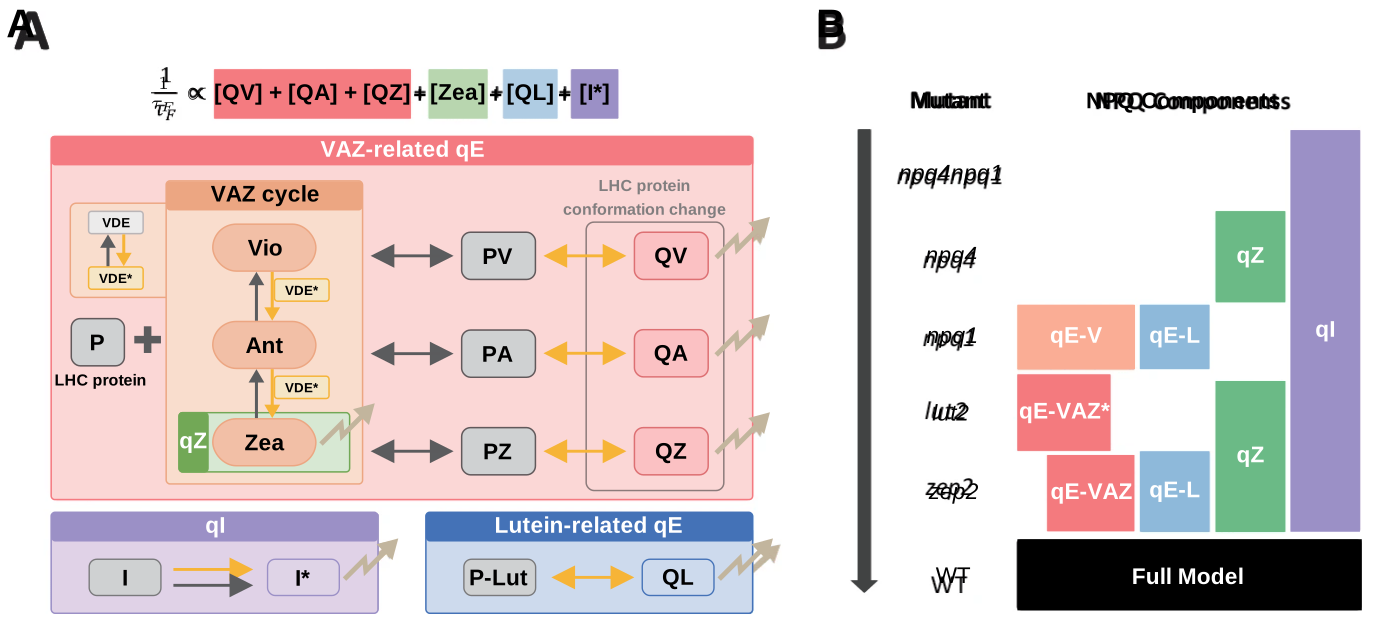
The Lam 2026 model — "Dissecting the contributions to non-photochemical quenching in a land plant under fluctuating light" — is a fluorescence-lifetime-based kinetic model of non-photochemical quenching (NPQ) built to separate the individual photoprotective mechanisms that operate in a vascular land plant. It was parameterised against whole-leaf chlorophyll fluorescence-lifetime and xanthophyll-concentration measurements made on wild-type Nicotiana benthamiana and a panel of NPQ mutants, which let the authors assign a per-molecule quenching effectiveness to each xanthophyll and tease apart the distinct quenching components. Accordingly, the model tracks the xanthophyll-cycle pigments — violaxanthin (V), antheraxanthin (A) and zeaxanthin (Z) — together with their association with the PsbS- and antenna-bound quenching states (the PV/PA/PZ and QV/QA/QZ/QL/PL species), the violaxanthin-deepoxidase activation that drives the cycle, and a PSII photodamage term.
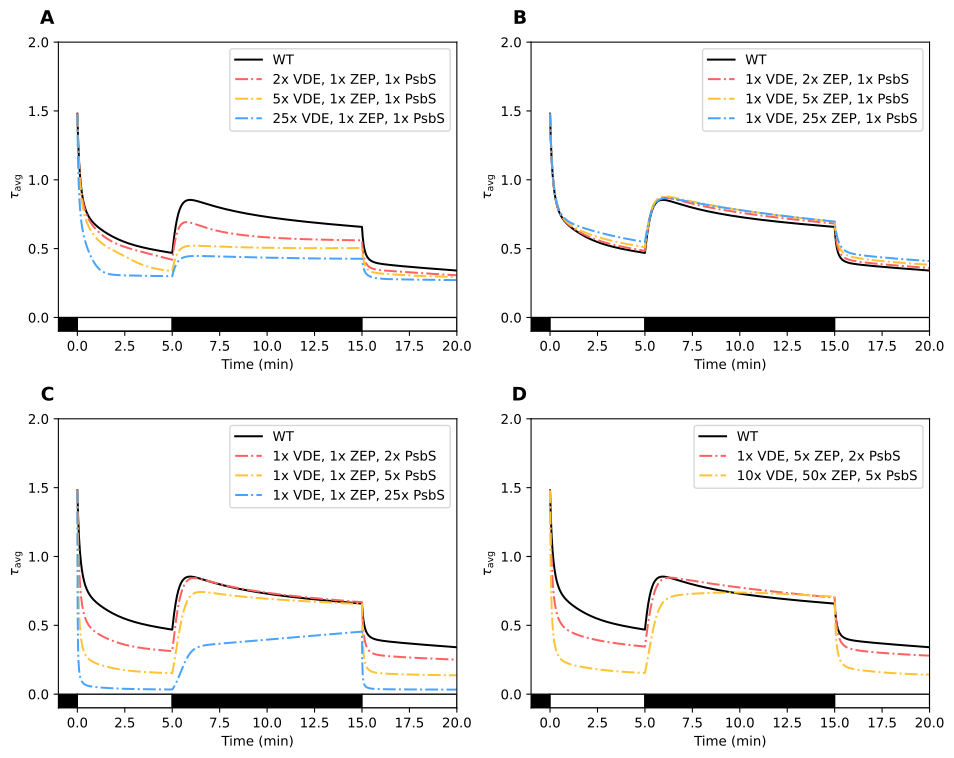
Because it is calibrated on time-resolved fluorescence lifetimes rather than steady-state amplitudes, the model can quantitatively predict both wild-type and mutant NPQ behaviour across light–dark regimes and fluctuating light, and it is used to explore how the relative amounts of the regulatory enzymes (the VDE : ZEP : PsbS ratio) shape the trade-off between photoprotection and light-harvesting efficiency — with implications for improving crop yield. It is included in GreenSloth as a recent, data-driven model that resolves the kinetics of the xanthophyll cycle and the multiple distinct contributions to NPQ in unusual detail.
Scheme
Analysis
Model definition
Variables
| Symbol | ID | Initial value |
|---|---|---|
| V | ||
| A | ||
| Z | ||
| PV | ||
| PA | ||
| PZ | ||
| QV | ||
| QA | ||
| QZ | ||
| QL | 0 | |
| PL | 165 | |
| PSIId | 0 | |
| alpha_VDE |
Parameters
| Symbol | ID | Value |
|---|---|---|
| k_L_VA | 2.47 | |
| k_D_VA | 0.014 | |
| k_L_AZ | 0.5 | |
| k_AV | 1.12 | |
| k_ZA | 0.07 | |
| k_PV_f | 2.18 | |
| k_PV_b | 9.43 | |
| k_PA_f | 130 | |
| k_PA_b | 254 | |
| k_PZ_f | 295 | |
| k_PZ_b | 126 | |
| k_L_QV_f | 0.027 | |
| k_D_QV_f | 0 | |
| k_QV_b | 0.066 | |
| k_L_QA_f | 0.66 | |
| k_D_QA_f | 0 | |
| k_QA_b | 8.57 | |
| k_L_QZ_f | 0.56 | |
| k_D_QZ_f | 0 | |
| k_QZ_b | 1.22 | |
| k_L_QL_f | 0.056 | |
| k_QL_b | 3.68 | |
| k_D_QX_f | 0 | |
| k_L_damage | 0.0222 | |
| k_D_damage | 0.0161 | |
| k_D_VDE | 0.24 | |
| k_L_VDE | 0.28 | |
| k_AV_aba1 | 0.006 | |
| k_ZA_aba1 | 0.038 | |
| k_PV_f_lut2 | 1.43 | |
| k_PV_b_lut2 | 13.1 | |
| k_PA_f_lut2 | 34.4 | |
| k_PA_b_lut2 | 294 | |
| k_PZ_f_lut2 | 74.1 | |
| k_PZ_b_lut2 | 168 | |
| V_tot_npq1 | 49.8 | |
| V_tot_lut2 | 71.2 | |
| V_tot_npq4 | 40.6 | |
| V_tot_aba1 | 10.7 | |
| V_tot_WT | 35.9 | |
| P_tot | 45.4 | |
| P_tot_lut2 | 49.9 | |
| kappa_QV | 0.04 | |
| kappa_QA | 0.174 | |
| kappa_QZ | 0.177 | |
| kappa_QL | 0.262 | |
| kappa_qZ | 0.03 | |
| kappa_qI | 3.86 | |
| kappa_qI_double_mut | 7.05 | |
| ppfd | 0 | |
| tau_0 | 1.730890791 | |
| PSII_tot | 1 |
Derived quantities
| Symbol | ID | Equation |
|---|---|---|
| gamma | ||
| k_D_AZ | ||
| Keq_pz | ||
| Keq_pv | ||
| Keq_pa | ||
| Keq_a | ||
| Keq_z | ||
| Keq_qv | ||
| Keq_qa | ||
| Keq_qz | ||
| P0 | ||
| A_0 | ||
| Z_0 | ||
| PV_0 | ||
| PA_0 | ||
| PZ_0 | ||
| QV_0 | ||
| QA_0 | ||
| QZ_0 | ||
| X_tot | ||
| kappa_r_nr | ||
| PSII_active | ||
| P_free | ||
| tau_Fluo | ||
| NPQ_V | ||
| NPQ_A | ||
| NPQ_Z_qE | ||
| NPQ_L | ||
| NPQ_Z_qZ | ||
| NPQ_qI |
Reactions
| Symbol | ID | Rate | Stoichiometry |
|---|---|---|---|
| VA | |||
| AV | |||
| AZ | |||
| ZA | |||
| PVf | |||
| PVb | |||
| PAf | |||
| PAb | |||
| PZf | |||
| PZb | |||
| QVf | |||
| QVb | |||
| QAf | |||
| QAb | |||
| QZf | |||
| QZb | |||
| QLf | |||
| QLb | |||
| damage | |||
| v_alpha_VDE |
Curation
- July 2026: Maintenance by Marvin van Aalst
- June 2026: Initial implementation by Quang Huy Nguyen
This model was validated by reproducing the following figures of the original publication.
Figures
Fig2
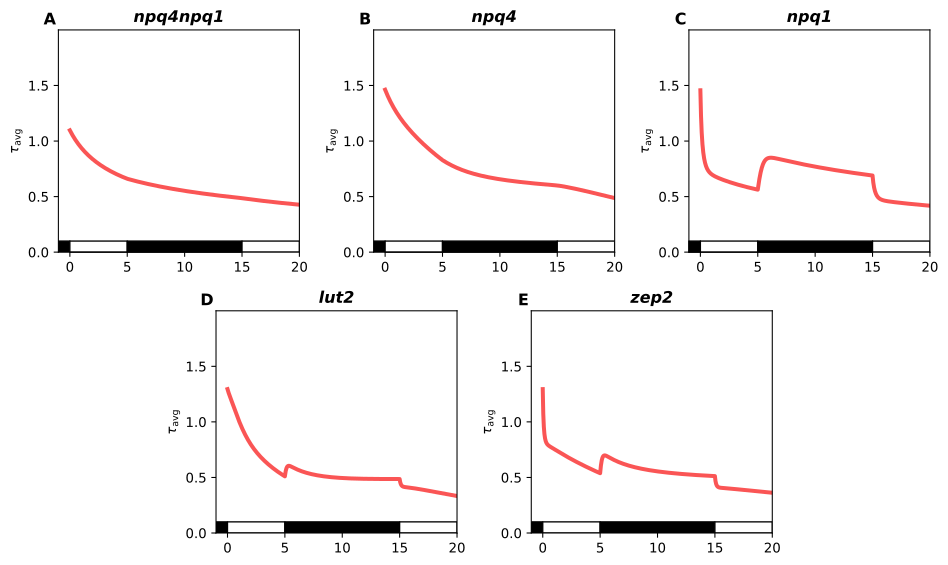
Fig3
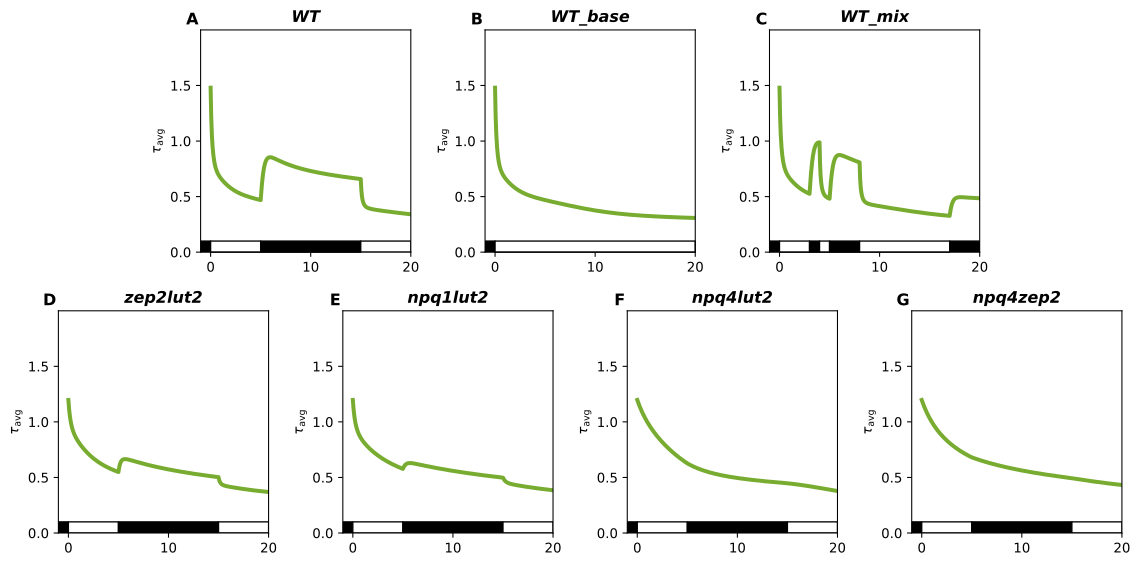
Fig4
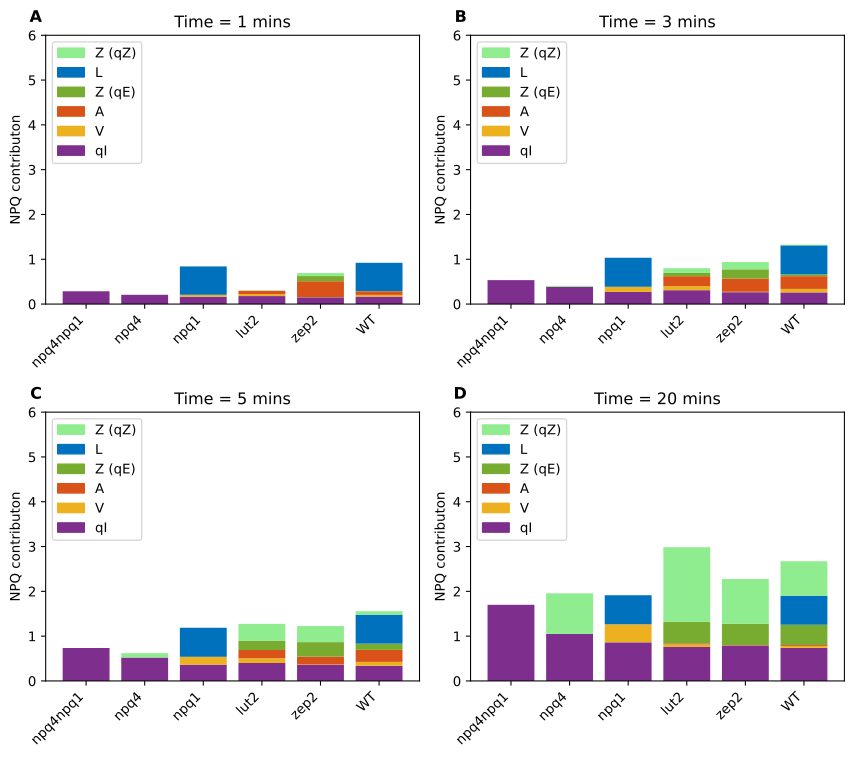
Fig5