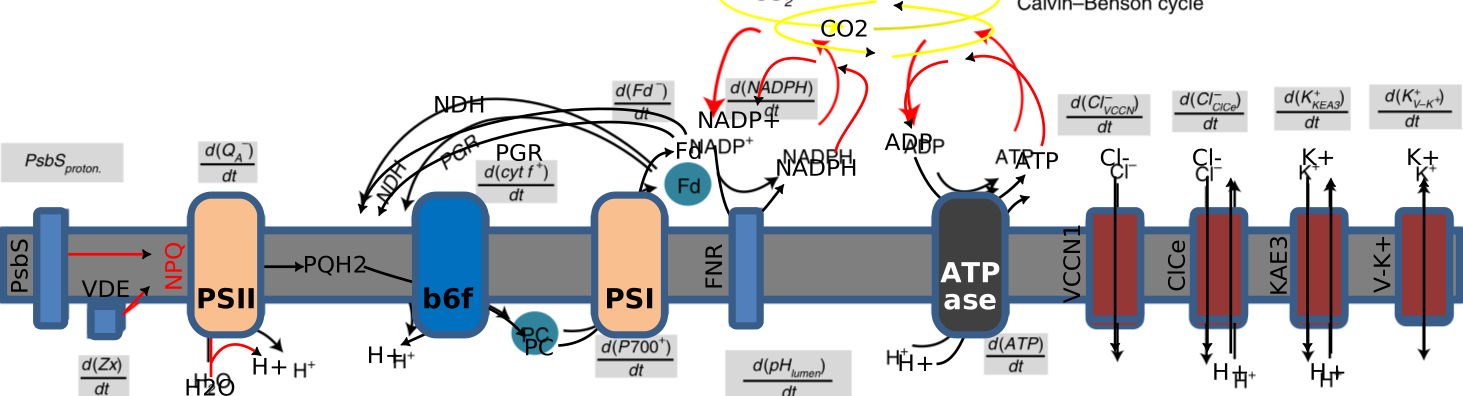
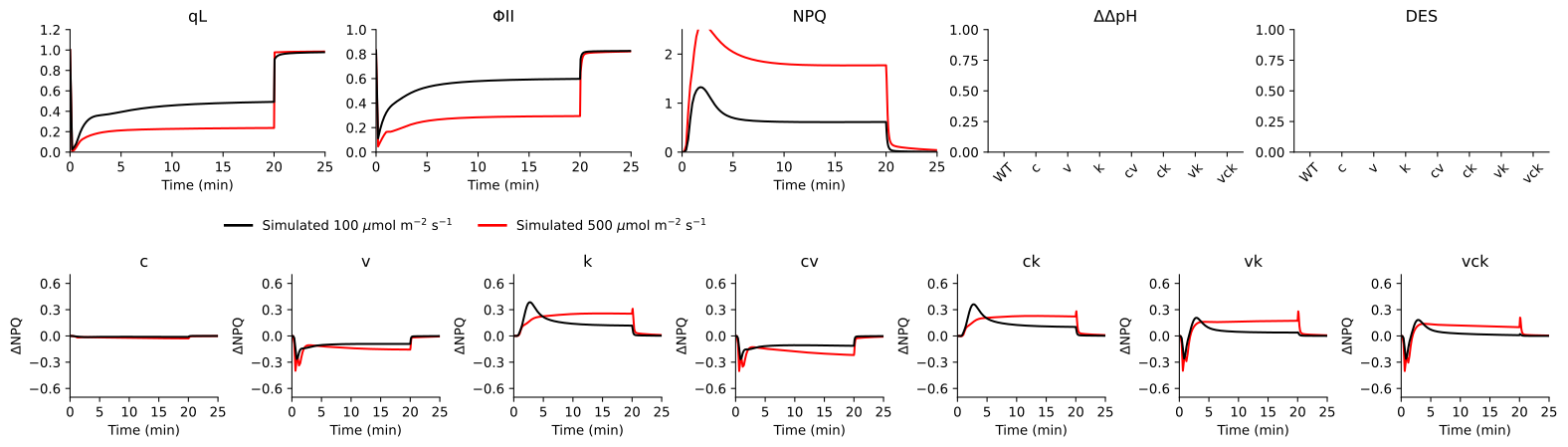
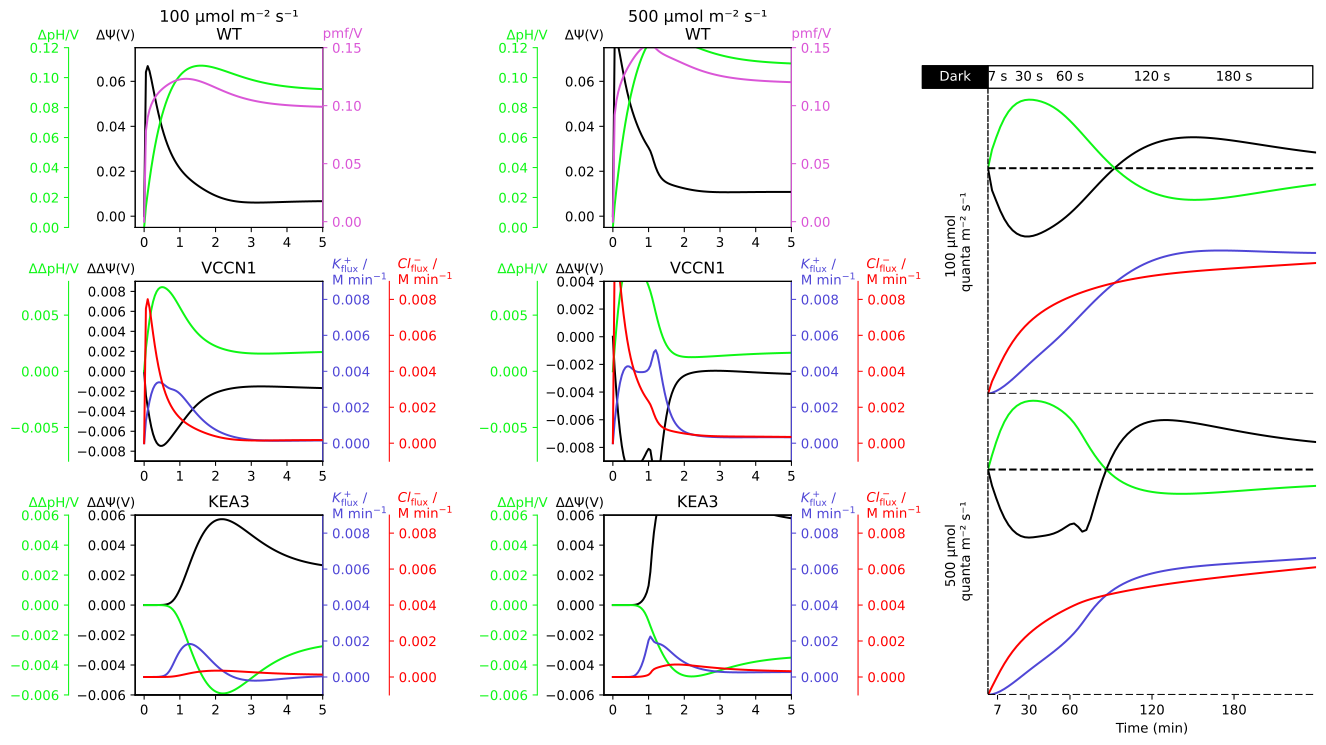
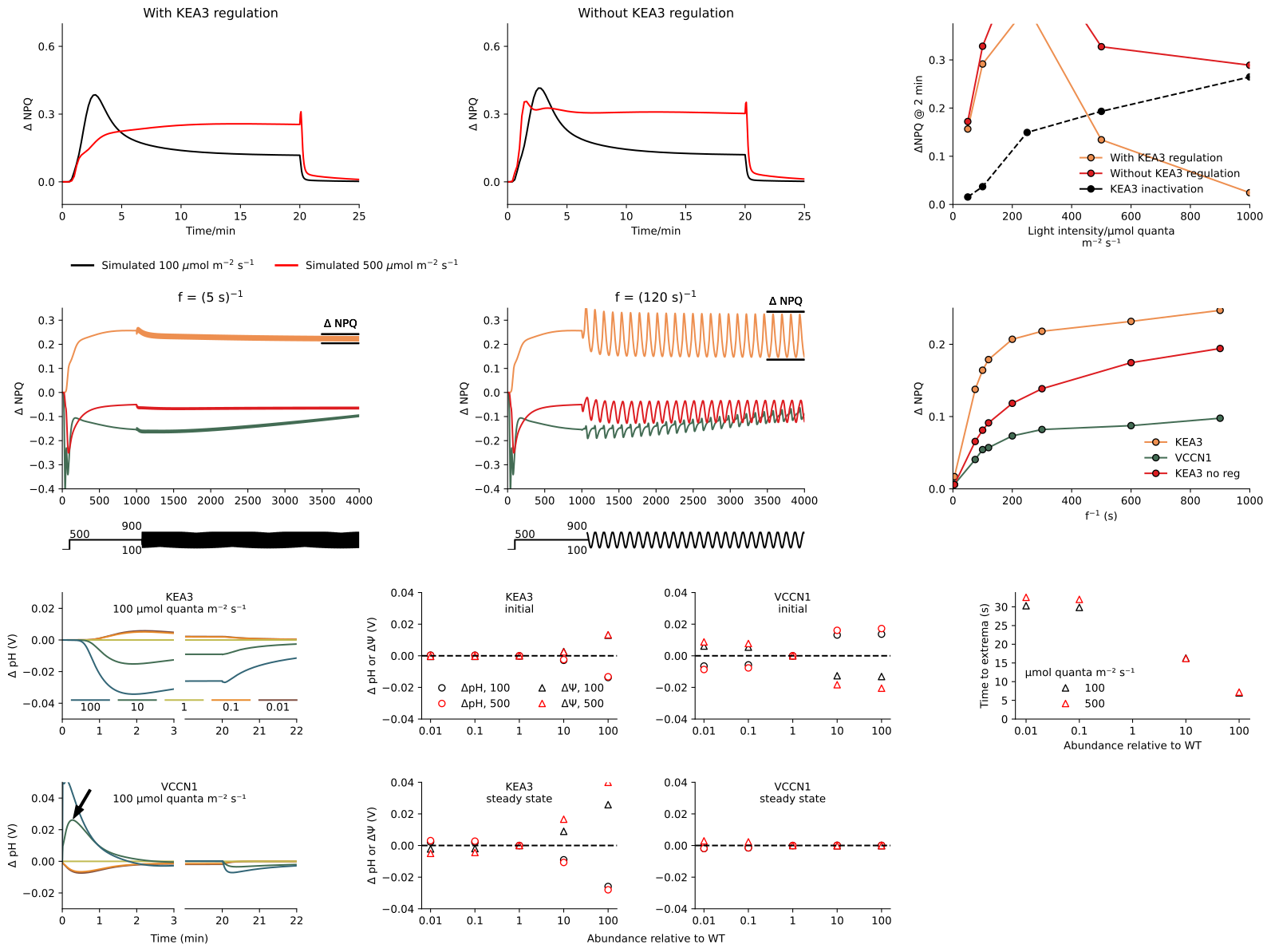
The Li 2021 model is a kinetic model of photosynthesis that focuses more on the ion fluxes across the thylakoid membrane and their effect on the proton motive force (PMF). It was built on the Davis2017 model, focuses more on the photosynthetic reactions that are directly linked to the PMF, such as the water splitting at PSII, the plastoquinone oxidation at the Cytochrome b6f complex (Cyt b6f) complex, and more. Other photosynthetic reactions are kept as simple as possible. The Li2021 model adds two potassium ion (K+) and two chloride ion (Cl<sup>-</sup>) ion transport channels to the thylakoid membrane, to investigate their effects on the PMF. To validate the model, the authors compare their simulated results to experimental data from several different experiments. They show that the model can reproduce not only wild type (WT) behavior, but also the behavior of several knockout mutants. The mutants chosen, were the VCCN1, Cl<sup>-</sup> channel (CLCE) and K<sup>+</sup>/H+ antiporter 3 (KEA3) knockouts and any combination thereof. After the validation, the model is then used to investigate the impact these ion channels have on the PMF and the resulting photosynthetic efficiency. Several interesting simulation protocols are used, to showcase the model’s capabilities, such as a light oscillation protocol, a scan of enzyme abundance and more. Overall, this model was created to answer an already existing question in the field of photosynthesis, which is the role of ion fluxes across the thylakoid membrane.
The model itself is not well presented in the publication, but the authors do provide a link to a public GitHub repository where the model is available. It is written in Python, with many comments added to the code. The script includes many different parts of the model and simulation protocols, therefore it is not clear, what is part of the model used in the publication. The script was summarized as much as possible, to only include the parts relevant to the model, but it is not clear if this interpretation is that of the publication. Between the code and the minimal information given in the publication and its supplementary materials, there are still discrepancies, which makes it hard to fully establish the model and its parameters. However, the model shows a good example of why models of photosynthesis are important and versatile, which is why it was included in GreenSloth.
Scheme